The material guide
What Is Reactive Glaze? Glazed Ceramic Bathroom Accessories Explained
Why reactive and crackle glazes look different on every piece, and how to choose and care for glazed ceramic soap dispensers and bathroom sets.
By NOLMERE · · 1 min read

Glaze, in short
A glaze is a thin, glass-like coating that fuses to ceramic in the kiln. It seals the surface and gives the piece its colour and shine.
What makes a glaze reactive
Reactive glazes contain ingredients that move and interact as they melt. Colour pools in some places and thins in others, leaving speckles, drips and soft halos. The result depends on the thickness of the glaze and where the piece sits in the kiln, so no two pieces come out exactly alike.
Crackle glaze
A crackle glaze shows a fine network of lines, sometimes called crazing, which forms as the glaze and the clay cool at slightly different rates. On the Celadon Crackle Glaze set it sits over a soft sage green, so the surface looks like old porcelain.
Our glazed ceramic pieces
The Reactive Glaze Ceramic Bathroom Set brings a speckled ivory dispenser, toothbrush holder and soap dish together. The Blue Green set has a 450 ml dispenser, the Speckled Glaze dispenser holds 400 ml with a gold pump, and the Iridescent Pearl dispenser comes round (250 ml) or square (225 ml).
Ceramic or stone?
Ceramic is lighter than stone and offers colours that stone cannot, from sea green to pearl. A glazed surface is also less porous, so everyday care is simple. Stone, by contrast, brings natural veining and weight.
Caring for glazed ceramic
Wipe with a soft, damp cloth and a little mild soap. Avoid abrasive scourers, and do not put the pump in the dishwasher. Crackle lines and glaze variation are part of the design.
Shop the pieces.
Explore all pieces


More from the journal.
All guides
The material guide
Marble Bathroom Accessories: A Guide to Colours, Veining and Finishes
How to choose a marble soap dispenser or marble bathroom set: colours from Emperador brown to emerald green, finishes, sizes, matching taps and care.
Read the guide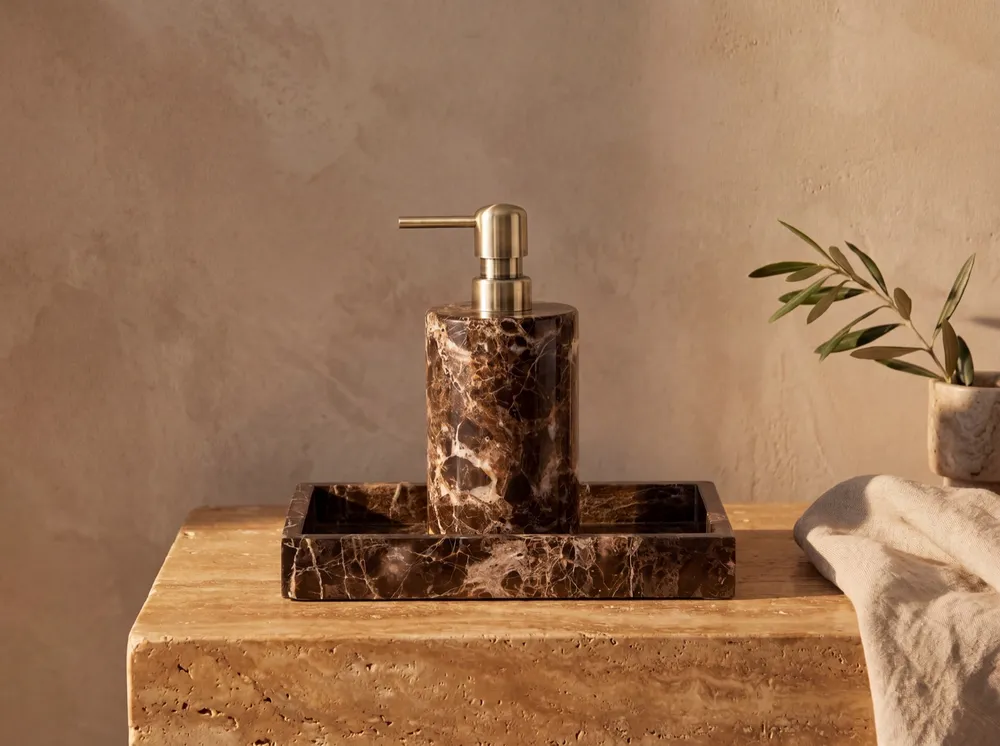
The material guide
Marble vs Travertine vs Ceramic: How to Choose a Soap Dispenser
How marble, travertine and glazed ceramic soap dispensers differ in look, feel and care, and how to choose the right material for your bathroom.
Read the guide
Care notes
How to Refill a Soap Dispenser and Fix a Pump That Won’t Pump
A step-by-step guide to refilling stone and ceramic soap dispensers, priming the pump and clearing a blocked nozzle without marking the finish.
Read the guide